

And Mary said, “My soul magnifies the Lord,
Luke 1:46-55
and my spirit rejoices in God my Savior,
for he has looked with favor on the lowliness of his servant. Surely, from now on all generations will call me blessed;
for the Mighty One has done great things for me, and holy is his name.
His mercy is for those who fear him from generation to generation.
He has shown strength with his arm; he has scattered the proud in the thoughts of their hearts.
He has brought down the powerful from their thrones, and lifted up the lowly;
he has filled the hungry with good things, and sent the rich away empty.
He has helped his servant Israel, in remembrance of his mercy,
according to the promise he made to our ancestors, to Abraham and to his descendants forever.”

Devotional
Whenever you see pictures of Mary in paintings or sculptures, she is almost always peaceful and calm, gazing down at the baby Jesus. This quiet and serene image is inverted, however, when we read her song in Luke. While Mary only speaks four times in Scripture with three of those in Luke, this poem represents the vast majority of her words. Often called the “Magnificat” (After its first word in the Latin translation), in this beautiful poem, we see a bold, confident, and revolutionary call to dismantle systems of oppression and imbalance and replace them with justice and peace.
Scholars often read Mary’s song alongside the song that Hannah prays in 1 Samuel 2. Like Elizabeth, Hannah is a woman described as barren. While praying to the Lord, she promises that if she is able to bear a child, she will dedicate them to the Lord. When this prayer is answered, Hannah follows through and prays her beautiful poem after delivering Samuel to the High Priest in Jerusalem. There are many similarities between these two scriptures. Both begin with rejoicing and move to praises of God saving work. They each also call for a societal reversal where those who were hungry are full, those who were rich are poor, and those who were humbled are powerful. However, there are also some distinct differences. Mary’s song has a greater awareness of her place in history. She recognizes that “all generations will call me blessed” (1:48) as well as connecting God’s faithfulness across generations (1:55). Secondly, Hannah’s song features much more militaristic language. She speaks boldly against enemies (2:1), she draws on armor imagery by contrasting the broken bows of the mighty with those who have stumbled strapping on strength like a shield (2:4). Finally, Hannah ends with a prayer for strength to the King. It is this last verse which explains the reason for the more military images. 1 Samuel is a book that describes the path Israel took from being led by Judges to ruled by a King. It is Samuel, Hannah’s child, who will be the one to first anoint Saul and then David as Kings over God’s people. And so her song serves as a prelude to her son’s work.
Mary’s song serves a similar purpose. Her historical focus is a reminder for us that in Jesus, God entered into history through a particular people. The Jewish context of Jesus is essential for us to understand his message, and it is also a reminder that God’s engagement with humanity did not originate with Jesus, but has been a consistent movement of God “from generation to generation”
It is also important to note that while Hannah’s son chose to empower military leaders to enact God’s will, Mary’s son will work for that same goal in a different way. Instead of relying on violence or military might, Jesus will demonstrate the true power of mercy to upend sinful systems and promote the possibility of peace. In our fallen ways of thinking, it is easy to forget the ability of mercy and love to affect change in our world. When we default to the tools such as weapons or strength that have seemed to work for us in the past, we reject the resources that God offers to us that will create a Kingdom of peace and prosperity for all people in this world rather than just for the few who can grasp it for themselves. In this season of Advent when we are looking forward to the birth of Christ, Mary’s song of praise to God is a reminder for us that the son Mary sings about and for which we are waiting, is the God who is willing to upend everything to achieve justice and will achieve dominion through mercy. The question for us is whether we are brave enough to follow his example?
Baking Meditation
When thinking about what cookie would represent Mary’s song, I immediately went with something delicate and floral like a shortbread. In my mind, these cookies that melt in your mouth feel fancy and special, yet are surprisingly simple. I added rose water in because it has been Mary’s symbol for over a millennia, and the cardamom is one of my favorite spices due to its warm earthy flavor.
However, as I put the dough together thinking about her song, the aroma of rose filled the kitchen. I realized in that moment that there is a strength in something that seems so soft. In creating this recipe, I used the “Ted Lasso” base recipe. It is a simple and reliably good cookie, however, the role that shortbread cookies have in the TV show is inspiring. **SPOILER ALERT** Through Ted’s unrelenting compassion and mercy, as well as his consistent cookie gifting, he wins over the hardened heart of his boss. In our world we assume that the way to get ahead is to outwit, out play or out last your opponents. Mercy, love, and compassion, however, take much less effort. Peace is in so many ways easier than war. This simple cookie is one that lingers. The smell of the rosewater will be in the air for hours, the buttery taste will stay on your tongue. As you sense the cookies throughout the baking process, reflect on the subtle ways God has influenced your life. How can God use your small acts of love and compassion to wear away the hardened places and people around you?
Prayer
Upending God, When my heart is hardened and my habits formed by the patterns of this world, open my will up to your disturbing love. When I witness the places around me where injustice is embedded and violence is normalized, let me, like Mary, sing your new song of love and mercy so that the lowly are lifted up, the powerful are humbled, and the world is reflective of your Kingdom. Amen.
Recipe: Rose Cardamom Shortbread
(adapted from The Kitchn & Gemma Stafford)
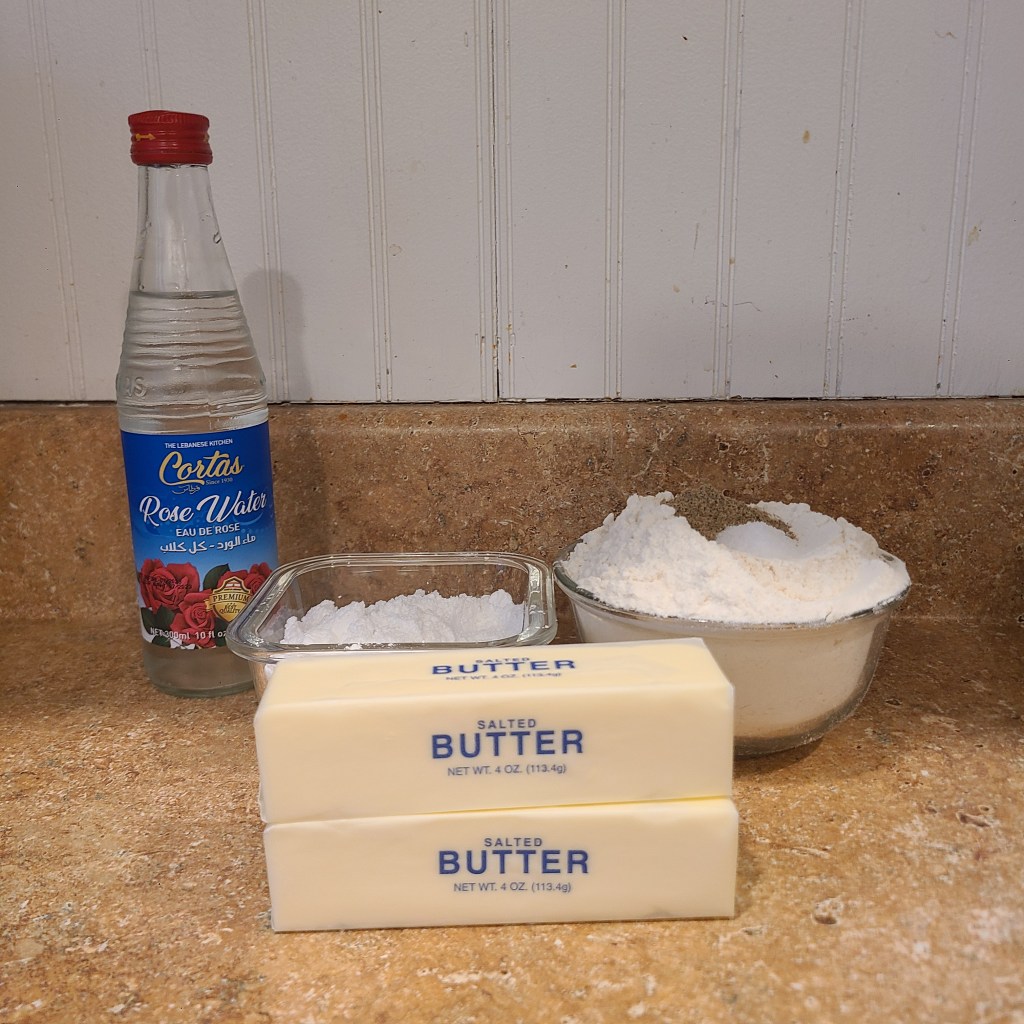
Wet Ingredients
- 2 sticks butter (225g)
- 3/4c powdered sugar (85g)
- 2t rose water
Dry Ingredients
- 2 1/4c all purpose flour (270g)
- 2t cardamom
- 1/2t salt
Step 1: Preheat oven to 300 degrees F, butter an 8″x8″ or 9×9 pan (I use the butter wrappers for this)
Step 2: Combine the dry ingredients in a medium bowl
Step 3: In a large bowl, sift the powdered sugar into the butter and cream together.
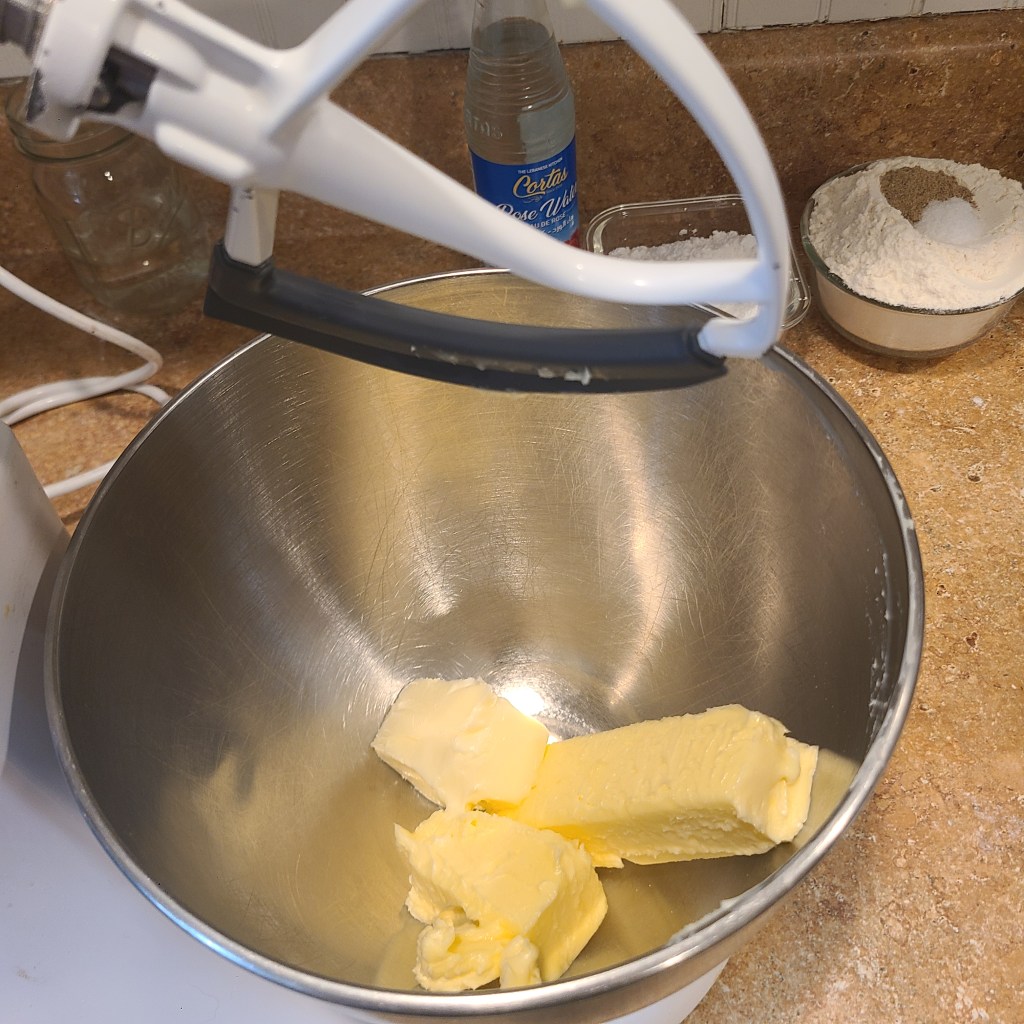
Step 4: Add in the rose water, stir to combine

Step 5: Sift the dry ingredients into the large bowl and slowly stir to combine.

Step 6: Spread evenly into your pan (another good use for butter wrappers). Be careful not to overwork the dough.
Step 7: Bake for around an hour until the edges are slightly brown
 Rev. Drew Weseman